Wellness Program Health Plan Discount Guide 2026
A wellness program health plan discount is a direct reduction in your insurance premium, out-of-pocket costs, or service fees when you complete specific health activities your insurer defines. For self-employed individuals and small business owners, these discounts are one of the most underused tools for cutting health insurance costs without sacrificing coverage. Programs like STATE OF HEALTH and ChooseHealthy show that wellness incentives now go well beyond gym reimbursements. They span premium credits, gift card rewards, and specialty service discounts that can add up to real annual savings.
What types of wellness program health plan discounts are available?
Wellness discounts fall into four distinct categories, and knowing each one helps you plan your spending before you enroll.
Premium discounts and credits are the most direct form of savings. Colorado’s STATE OF HEALTH program, available to employees enrolled in Cigna or Kaiser Permanente plans, offers up to $20 monthly when participants complete a wellness action plan. That is $240 per year just for following a structured health checklist.

Dollar rewards and gift cards come from completing health assessments or screenings. Medical Mutual’s WELL™ program offers up to $50 in e-gift cards for contract holders and eligible spouses aged 18 and older, with an activity window running from november 2025 through december 2026. These rewards require no major lifestyle change. A biometric screening or online health questionnaire is often enough to qualify.
Service and product discounts work differently. ChooseHealthy, offered through Johns Hopkins US Family Health Plan, gives members at least 25% off specialty services like acupuncture and chiropractic care, plus 10%–50% off fitness products across more than 114,000 participating providers. These are not insurance benefits. You pay out of pocket at a reduced rate.
Annual reimbursements cover fitness memberships and wellness apps. MetroPlusHealth’s Gold Plan reimburses up to $1,400 per year for fitness memberships and up to $300 annually for wellness apps, plus free dietician visits and acupuncture. That level of reimbursement can offset a meaningful portion of a small business owner’s wellness spending.
- Premium discounts: earned through wellness action plans or health coaching
- Gift card rewards: tied to screenings, assessments, and preventive visits
- Service discounts: applied at the point of service, not through your insurer
- Reimbursements: submitted after purchase, subject to annual caps
- Co-share credits: deposited into paychecks or accounts after a qualifying period
Pro Tip: Ask your insurer for a full list of qualifying activities before you enroll. Many programs offer more reward categories than their marketing materials show.
How do you evaluate wellness discounts in health plans?
Evaluating a wellness program discount requires looking past the headline number. A $500 annual credit sounds strong until you realize it pays out in the first half of the following year and requires active enrollment at payout time. Rhode Island’s Rewards for Wellness program pays up to $500–$700 in co-share credits after qualifying activities, but credits are delivered in paychecks in the first half of the year after you earn them. If you leave the plan before payout, you lose the reward.
The table below compares the key evaluation factors across common discount structures.
| Factor | Premium Discount | Gift Card Reward | Service Discount | Reimbursement |
|---|---|---|---|---|
| When you receive it | Monthly, ongoing | After activity completion | At point of service | After submission |
| Eligibility scope | Primary enrollee | Enrollee and spouse (18+) | Any plan member | Primary enrollee |
| Requires out-of-pocket spend | No | No | Yes | Yes, then recouped |
| Annual value range | Up to $240 | Up to $50 per activity | 10%–50% off services | Up to $1,400 |
| Timing risk | Low | Medium | Low | Medium |
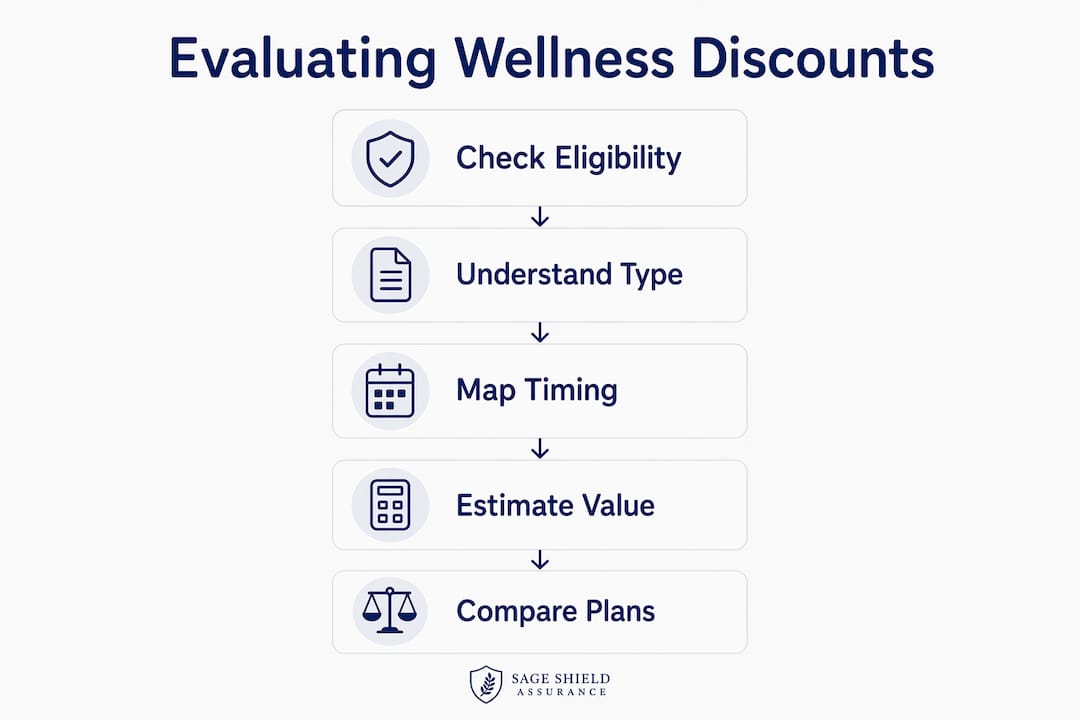
Three factors matter most when comparing plans as a self-employed individual or small business owner.
First, check eligibility scope. Some programs exclude spouses or dependents entirely. STATE OF HEALTH currently does not extend its wellness program savings to spouses, which limits household value for family plans.
Second, understand the discount type and amount. A flat 25% service discount has predictable value. A tiered incentive that pays more as you complete additional activities rewards consistent engagement but requires more tracking.
Third, map the timing. Discounts that pay out months after you earn them create cash flow gaps. For a self-employed individual managing quarterly expenses, that timing matters.
Pro Tip: Build a simple spreadsheet listing each discount type, its estimated annual value, and its payout date. Compare that total against the plan’s monthly premium before you commit.
How do you maximize savings through active participation?
Participation is where most people leave money on the table. Enrolling in a plan that offers discounted health program options is only the first step. Claiming every available discount requires a deliberate process.
- Enroll in the wellness program separately. Most insurers require you to register for the wellness component through a dedicated portal, separate from your health plan enrollment. Missing this step means missing all associated discounts.
- Complete your health assessment early. Many programs open their activity windows at the start of the plan year. Completing your health risk assessment in the first 30 days locks in eligibility for the full reward cycle.
- Schedule required screenings before deadlines. Biometric screenings, annual physicals, and preventive care visits often have hard cutoff dates. Rhode Island’s Rewards for Wellness program, for example, ties payout eligibility to active enrollment at the time credits are distributed, not just at the time activities are completed.
- Use service discounts at qualifying providers. ChooseHealthy discounts must be applied at the point of service. You cannot submit a receipt afterward and expect reimbursement. Confirm provider participation before your appointment.
- Stack multiple discount types. Combining premium discounts with reimbursements and service discounts produces the highest total value. Relying on a single discount type leaves savings unclaimed.
- Submit reimbursement claims promptly. Fitness membership reimbursements like those offered through MetroPlusHealth’s Gold Plan have annual caps. Submit receipts as soon as they accumulate to avoid losing value at year end.
Pro Tip: Set calendar reminders for every program deadline at the start of your plan year. Missed deadlines are the single most common reason small business owners forfeit wellness rewards.
What are the common pitfalls with wellness program discounts?
The most expensive mistake is assuming a discounted service is free or covered by your regular plan. ChooseHealthy is explicit: discounted provider visits require direct payment and cannot be submitted for reimbursement under your standard health plan. You are paying a reduced rate, not a zero rate.
Several other pitfalls consistently catch small business owners off guard.
- Payout timing surprises: Co-share credits from programs like Rhode Island’s Rewards for Wellness arrive in paychecks in the first half of the following year. Budget accordingly rather than counting on mid-year cash.
- Eligibility assumptions: Assuming a spouse or employee qualifies without checking program rules leads to missed savings. Many programs restrict rewards to the primary contract holder.
- Ignoring program costs: Running a formal wellness program for employees costs between $150 and $1,200 per employee annually, with small business ranges typically landing between $300 and $500 when platform fees and incentives are included. That cost must factor into your ROI calculation.
- Overlooking exclusions: Some plans exclude certain wellness services from discount eligibility. Read the program terms, not just the marketing summary.
- Skipping record-keeping: Tracking which activities you completed, when you completed them, and what rewards you claimed prevents disputes and helps you identify gaps before deadlines close.
Understanding plan design details is critical to realizing the full value of any wellness incentive. The programs that look most generous on paper often have the most conditions attached.
Key takeaways
Wellness program health plan discounts deliver the most value when you combine premium credits, service discounts, and reimbursements rather than relying on any single incentive type.
| Point | Details |
|---|---|
| Know your discount types | Premium credits, gift cards, service discounts, and reimbursements each work differently and require separate actions. |
| Check payout timing | Some credits arrive months after you earn them; plan cash flow around program schedules. |
| Confirm eligibility scope | Spouse and dependent eligibility varies widely; verify before assuming household coverage. |
| Stack multiple discounts | Combining premium, service, and reimbursement discounts produces the highest annual savings. |
| Track deadlines actively | Missed activity windows and submission deadlines are the leading cause of forfeited wellness rewards. |
Why most small business owners underuse these programs
Most small business owners I work with treat wellness discounts as a bonus rather than a budget line. That framing costs them real money every year.
The programs that deliver the most value require active management. You need to register separately, complete activities on schedule, and submit claims before deadlines. That is not complicated, but it does require intention. The owners who capture the most savings treat their wellness program like a quarterly financial task, not a set-it-and-forget-it benefit.
The other mistake I see constantly is fixating on the headline discount without reading the eligibility terms. A $700 annual credit sounds transformative until you realize it excludes your spouse, pays out eight months after you earn it, and requires active enrollment at payout time. The actual value after those constraints is often half what the program advertises.
My honest recommendation: assess wellness discounts as part of your overall health spending strategy rather than expecting any single program to dramatically cut your costs. The wins are real, but they are incremental. Stack them, track them, and review your plan options every year because programs change. What qualified last year may not qualify this year, and new incentives appear regularly.
Working with a broker who knows these programs in detail saves time and prevents the eligibility surprises that wipe out savings before you ever see them.
— mkaravas1m
How Sageshieldassurance helps you find plans with real wellness savings
Self-employed individuals and small business owners need health plans that work as hard as they do. Sageshieldassurance specializes in finding health insurance plans that include meaningful wellness incentives, not just token discounts buried in fine print.

With partnerships across leading insurers in 40 states, Sageshieldassurance reviews wellness program structures alongside premium costs so you see the full picture before you commit. The team identifies which plans offer stackable discounts, confirms eligibility for your specific situation, and supports you through program enrollment so no reward deadline slips by. If you want coverage that actively reduces your costs through wellness benefits for employees and yourself, Sageshieldassurance is the place to start.
FAQ
What is a wellness program health plan discount?
A wellness program health plan discount is a financial incentive your insurer provides when you complete specific health activities, such as screenings, assessments, or fitness participation. Discounts can take the form of premium reductions, gift card rewards, service price reductions, or annual reimbursements.
Do wellness programs actually lower insurance costs?
Yes, but the savings vary by program structure and participation level. Programs like STATE OF HEALTH offer up to $240 per year in premium savings, while reimbursement programs like MetroPlusHealth’s Gold Plan can return up to $1,400 annually for fitness expenses.
Are discounted wellness services covered by my health plan?
No. Service discounts through programs like ChooseHealthy require direct payment at the point of service and cannot be submitted for reimbursement under your standard health plan coverage.
How do i know when i will receive my wellness rewards?
Payout timing depends on the program. Some credits, like Rhode Island’s Rewards for Wellness co-share credits, are delivered in paychecks in the first half of the year following your qualifying activities. Check your program’s schedule at enrollment.
Can my employees and i both qualify for wellness program discounts?
Eligibility varies by plan. Some programs restrict rewards to the primary contract holder, while others extend benefits to eligible spouses aged 18 and older. Always verify dependent eligibility in the program terms before assuming household coverage.
Leave a Reply