Health Plan Compare Monthly Premiums: 2026 Guide
A monthly health insurance premium is the fixed amount you pay every month to keep your coverage active, regardless of whether you use medical services. For self-employed individuals and small business owners, comparing these premiums across plans is one of the most consequential financial decisions of the year. The difference between a Bronze and Gold plan can exceed $200 per month, and that gap widens further once deductibles and subsidies enter the picture. This guide uses 2026 ACA Marketplace data, real plan-tier breakdowns, and tools from resources like HealthCare.gov and Sageshieldassurance to help you make a comparison that accounts for your full cost of coverage, not just the sticker price.
What affects monthly health insurance premiums and plan affordability?
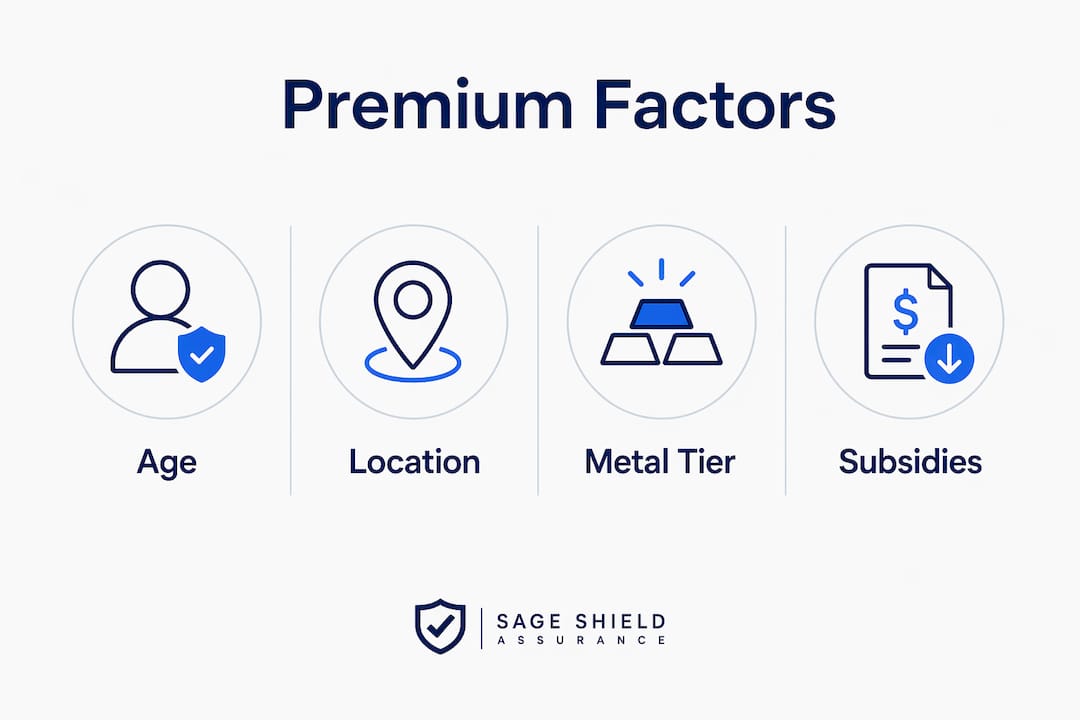
Monthly health insurance costs are not arbitrary. Four variables drive the number you see on your quote: your age, your location, the plan’s metal tier, and whether you qualify for subsidies.
Age and location create the widest swings. The ACA allows insurers to charge older adults up to three times more than younger enrollees, a rule called the 3:1 age rating cap. A 60-year-old in rural Mississippi will face a dramatically different quote than a 30-year-old in Austin, Texas, even on the same plan type.

Metal tiers set the premium-versus-deductible trade-off. The 2026 average monthly premiums by tier break down as follows:
| Metal tier | Average monthly premium | Average deductible |
|---|---|---|
| Bronze | $494 | High (often $7,000+) |
| Silver | $674 | Moderate |
| Gold | $703 | Low |
| Platinum | $903 | Very low |
Silver sits in the middle on price but holds a unique advantage: it is the only tier eligible for cost-sharing reductions (CSRs), which lower your deductible and out-of-pocket maximum if your income qualifies. That makes Silver the most nuanced tier to evaluate.
Deductibles matter as much as premiums. The ACA Marketplace average deductible climbed 37% to $3,786 per person in 2026. That increase means a plan with a $150 lower monthly premium could cost you thousands more in a year with even moderate medical use. Never treat the monthly figure as the total cost of a plan.
Subsidies change everything for self-employed buyers. Most Marketplace enrollees qualify for premium tax credits that cap their costs at 0 to 8.5% of income, sometimes reducing net premiums to $0. As a self-employed individual, your income fluctuates, which means your subsidy eligibility can shift year to year. Recalculating at every open enrollment is not optional. It is the difference between paying $300 a month and paying $700.
Pro Tip: If you pay your own premiums without employer contributions, the self-employed health insurance deduction lets you deduct 100% of your premium costs from your federal taxable income. This effectively reduces your real monthly cost by your marginal tax rate.
How to compare monthly premiums effectively using calculators and tools
Comparing health coverage premium differences requires more than lining up monthly quotes side by side. The most accurate method integrates premium, deductible, coinsurance, out-of-pocket maximum, and any applicable subsidies into a single annual cost estimate.
Here is a step-by-step process that works for self-employed buyers:
- Gather your baseline numbers. Collect the monthly premium, annual deductible, coinsurance percentage, and out-of-pocket maximum for each plan you are evaluating. Most plan summaries on HealthCare.gov list all four.
- Estimate your annual healthcare use. Are you generally healthy with one or two doctor visits per year? Or do you manage a chronic condition with regular prescriptions and specialist visits? Your usage pattern determines which tier saves you money.
- Run a subsidy calculation. Use a multi-plan comparison calculator that integrates ACA premium tax credits. Your net monthly premium after subsidy is the only number worth comparing across plans.
- Compare COBRA, ACA Marketplace, and Small Group plans. Self-employed individuals should evaluate all three options because Small Group plans can offer tax credits, risk pooling, and broader network access that ACA individual plans do not always match.
- Run a breakeven analysis. Calculate the point at which a lower-premium plan’s higher deductible costs more than the premium savings. If Plan A saves you $150 per month but has a $2,000 higher deductible, you break even at roughly 13 months of zero medical spending. One hospitalization erases that advantage immediately.
- Factor in HSA eligibility. High-deductible health plans paired with Health Savings Accounts offer triple tax benefits: contributions are pre-tax, growth is tax-free, and withdrawals for qualified medical expenses are tax-free. For a healthy self-employed individual, this combination often beats a Gold plan on total annual cost.
The benchmark Silver plan is the anchor for all subsidy calculations. If you choose a Gold plan, you pay the difference between the Gold premium and your subsidy amount. If you choose Bronze, your net premium drops further. Understanding where the benchmark sits in your state is the single most useful piece of data in any premium comparison.
Pro Tip: HealthCare.gov’s plan comparison tool shows your estimated annual costs based on expected usage, not just monthly premiums. Use the “estimated total yearly costs” column, not the premium column, when making your final decision.
Common mistakes when comparing health insurance plans
The most expensive mistake self-employed buyers make is choosing the plan with the lowest monthly premium without modeling total annual costs. A Bronze plan at $494 per month sounds appealing until you factor in a deductible that can exceed $7,000. For someone with even one significant medical event per year, that plan often costs more than a Silver or Gold option.
Here are the pitfalls that consistently lead to poor plan choices:
- Ignoring subsidy eligibility. Forty percent of Marketplace consumers chose Bronze plans in 2026, up from 30% in 2025. Many did so without calculating their after-subsidy Silver cost, which in some income brackets is nearly identical to Bronze but with far lower out-of-pocket exposure.
- Skipping network verification. A plan with a low monthly premium may exclude your primary care physician or preferred hospital. Out-of-network costs are not capped by your plan’s out-of-pocket maximum in most cases, making network gaps a hidden financial risk.
- Overlooking future medical needs. If you expect a surgery, pregnancy, or new prescription in the coming year, a low-premium, high-deductible plan will cost you significantly more. Model your expected usage before you commit.
- Missing SHOP eligibility. Small business owners with fewer than 25 full-time employees may qualify for the Small Business Health Care Tax Credit through the SHOP Marketplace, worth up to 50% of premium costs paid. Many owners skip this entirely because they assume it does not apply to them.
- Forgetting the self-employed deduction. The self-employed health insurance deduction reduces your adjusted gross income, which in turn can increase your subsidy eligibility. Not accounting for this creates a circular calculation that most buyers get wrong without professional help.
“The cheapest plan is not the most affordable plan. Affordability is a function of total annual cost, network access, and how well the plan matches your actual health needs.” — Sageshieldassurance
Tips to lower your monthly health insurance premiums without losing coverage
Reducing your monthly premium does not require accepting worse coverage. It requires smarter plan selection and awareness of every cost-reduction lever available to you.
- Choose Silver with cost-sharing reductions if your income qualifies. If your income falls between 100% and 250% of the federal poverty level, Silver plans with CSRs dramatically reduce your deductible and out-of-pocket maximum. The monthly premium stays the same as standard Silver, but your actual financial exposure shrinks considerably.
- Pair an HDHP with an HSA. HDHPs typically cost between $200 and $400 per month, with deductibles starting at $1,650 for individuals. For self-employed individuals who are generally healthy and want to build tax-advantaged medical savings, this combination offers significant cost savings compared to richer plans.
- Adjust your reported income strategically. Premium tax credits are calculated on projected annual income. If your income is variable, work with a tax advisor or broker to estimate your income accurately. Underestimating triggers repayment at tax time; overestimating means you overpay monthly.
- Consider bundling family coverage. Adding dependents to a single plan often costs less per person than purchasing separate individual plans. Run the numbers on both scenarios before assuming a family plan is always cheaper.
- Work with a broker who specializes in your situation. Sageshieldassurance works with self-employed individuals and small business owners across 40 states, comparing ACA, COBRA, and Small Group options to find the lowest after-tax monthly cost. The service costs you nothing because brokers are compensated by insurers, not clients.
Pro Tip: Review your plan every year during open enrollment, even if you are satisfied with your current coverage. Premiums, deductibles, and subsidy thresholds all shift annually. The plan that was optimal in 2025 may not be the best monthly premium health plan for 2026.
Key takeaways
Comparing monthly health insurance premiums accurately requires evaluating total annual costs, subsidy eligibility, and plan-tier trade-offs rather than monthly figures alone.
| Point | Details |
|---|---|
| Metal tier drives premium range | Bronze averages $494/month; Platinum averages $903/month in 2026, with Silver as the only CSR-eligible tier. |
| Deductibles offset premium savings | The average ACA deductible rose 37% to $3,786 in 2026, making low-premium Bronze plans costly for moderate health users. |
| Subsidies can cut costs to $0 | Most Marketplace enrollees qualify for tax credits capping costs at 0 to 8.5% of income. Always calculate net premium. |
| HDHP plus HSA offers triple tax benefits | HDHPs paired with HSAs reduce taxable income, grow savings tax-free, and cover qualified expenses without tax. |
| Annual review is non-negotiable | Premiums, subsidies, and deductibles change every year. Skipping open enrollment review costs most self-employed buyers money. |
Why the premium-first mindset costs self-employed buyers the most
Most buyers I work with come in fixated on the monthly number. That instinct makes sense. When you are self-employed and managing cash flow, a $200 monthly difference feels immediate and real. But the premium-first mindset is the single most reliable way to end up underinsured and overexposed.
Here is what I have seen repeatedly: a freelance consultant picks a Bronze plan at $494 per month to save $180 over Silver. Then in March, they need an MRI. The $7,000 deductible hits before insurance pays a dollar. That $180 monthly saving evaporates in the first medical bill. The Silver plan with cost-sharing reductions would have capped the same deductible at under $1,000 for someone at their income level.
The counterintuitive truth is that Silver plans are often the most affordable health insurance comparison outcome for self-employed buyers in the $35,000 to $60,000 income range, precisely because of CSRs. Bronze looks cheaper on paper. Silver is cheaper in practice.
I also push back hard on the idea that comparing plans is a one-time annual task. Subsidies shift with income. New plans enter your market. Insurers change their networks. The buyer who spent 90 minutes comparing plans in November 2024 and never looked again is almost certainly overpaying in 2026. Treat open enrollment like a quarterly business review. The math changes, and so should your plan.
— mkaravas1m
How Sageshieldassurance helps you find the right plan
Sageshieldassurance specializes in exactly the kind of comparison this article describes: integrating premiums, deductibles, subsidies, and tax deductions into a single, clear recommendation for self-employed individuals and small business owners.

Their team compares ACA Marketplace, COBRA, and Small Group plans across 40 states, factoring in the self-employed health insurance deduction and Small Business Health Care Tax Credit where applicable. You get a personalized breakdown of your best health plan premiums without paying broker fees. If you want a second opinion on your current plan or need to compare options for the first time, Sageshieldassurance’s brokerage team provides the kind of trusted brokerage guidance that turns a confusing process into a confident decision.
FAQ
What is a monthly health insurance premium?
A monthly health insurance premium is the fixed payment you make each month to maintain active coverage, separate from deductibles and copays. It does not change based on how much medical care you use.
How do I compare health premiums across plan types?
Use a multi-plan calculator that includes premium, deductible, coinsurance, out-of-pocket maximum, and subsidy eligibility to calculate total annual cost for each plan. The monthly premium alone does not reflect what you will actually spend.
What is the average monthly premium for a Silver plan in 2026?
The average Silver plan premium is approximately $674 per month for an adult in 2026, though age, location, and subsidy eligibility significantly affect your actual net cost.
Can self-employed individuals get subsidies to lower monthly premiums?
Yes. Self-employed individuals who purchase coverage through the ACA Marketplace can qualify for premium tax credits that cap their costs at 0 to 8.5% of income, sometimes reducing monthly premiums to $0.
Is a Bronze plan always cheaper than Silver for self-employed buyers?
Not after subsidies and cost-sharing reductions are applied. Silver plans are the only tier eligible for CSRs, which can reduce deductibles to under $1,000 for income-qualifying buyers, making Silver the lower total-cost option in many real-world scenarios.
Leave a Reply